Mortgages
The Doctor Mortgage Calculator: How Much Can You Really Borrow?
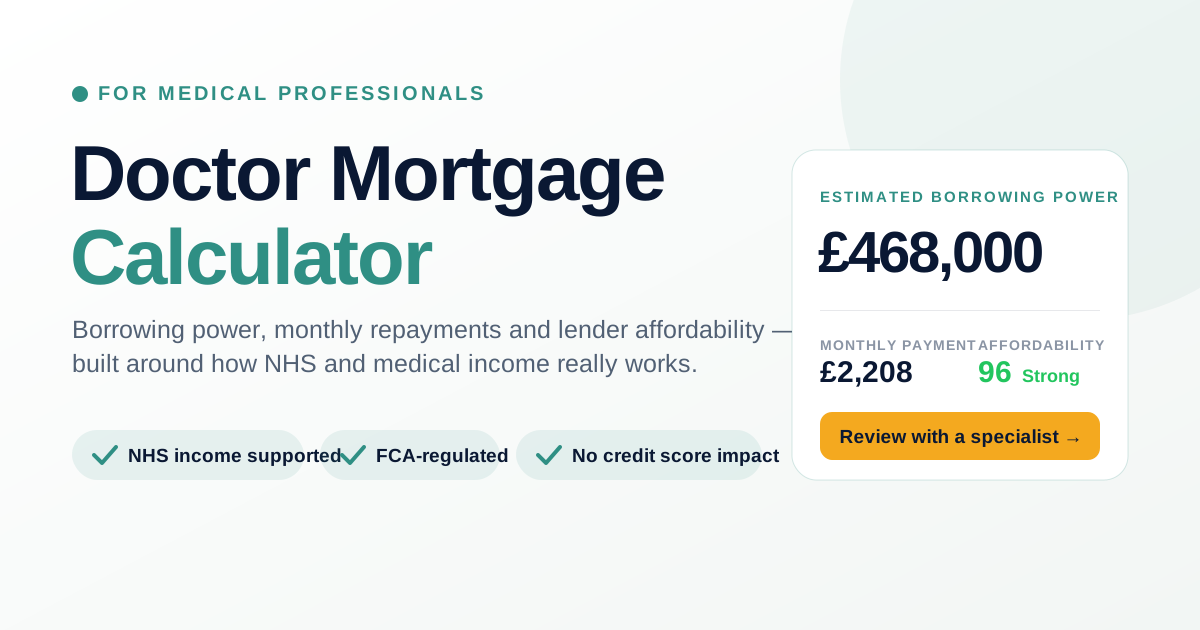
Working out how much you can borrow is the first real question for any doctor thinking about buying a home — and a generic high-street calculator rarely gets it right for medical careers. Our Doctor Mortgage Calculator estimates your borrowing power, monthly repayments and lender affordability around how NHS and medical income actually works, and it updates live as you adjust the figures. This guide explains what it works out, how the numbers are arrived at, and how to read your results.
Why doctors need a different calculator
Medical pay does not behave like a standard salaried job. Training salaries step up through defined points, NHS roles can carry banding and rotations, and many doctors have locum, private-practice or future-consultant earnings on top of base pay. Specialist lenders understand these patterns and can take a more informed view than a high-street model that only reads your basic salary. A calculator built for doctors lets you reflect that reality before you ever speak to a lender.
What the calculator works out
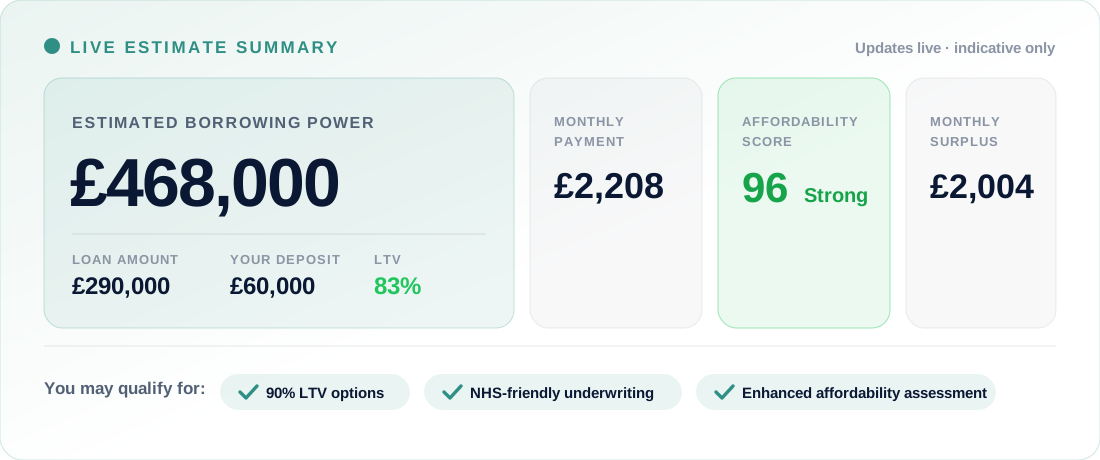
From a small set of inputs — your income, deposit and the property you are looking at — the calculator produces the figures that actually drive a mortgage decision:
- Estimated borrowing power — an indication of the maximum you may be able to borrow.
- Loan amount and loan-to-value (LTV) — the loan for your chosen property and how it compares to the price.
- Estimated monthly payment — repayment at your chosen rate and term.
- Affordability score — a simple read on how comfortable the numbers look.
- Monthly surplus — what is left after the stressed payment and commitments.
- Upfront costs — deposit plus an estimate of stamp duty and other fees.
How borrowing power is estimated
Borrowing power is the lower of two checks, which is exactly how an underwriter thinks:
- The income-multiple cap — roughly 4 to 5 times your gross annual income.
- The affordability cap — how much of your monthly take-home pay, after existing commitments, can service the mortgage when tested at a higher "stress" interest rate over the term.
Because of this, raising your salary, clearing commitments, extending the term or increasing your deposit each move the number in a way you can see immediately. Any additional income you enter — rental, investment or private work — is counted at 60%, reflecting the discount lenders apply to that kind of income for voids, costs and sustainability.
Reading the borrowing power range
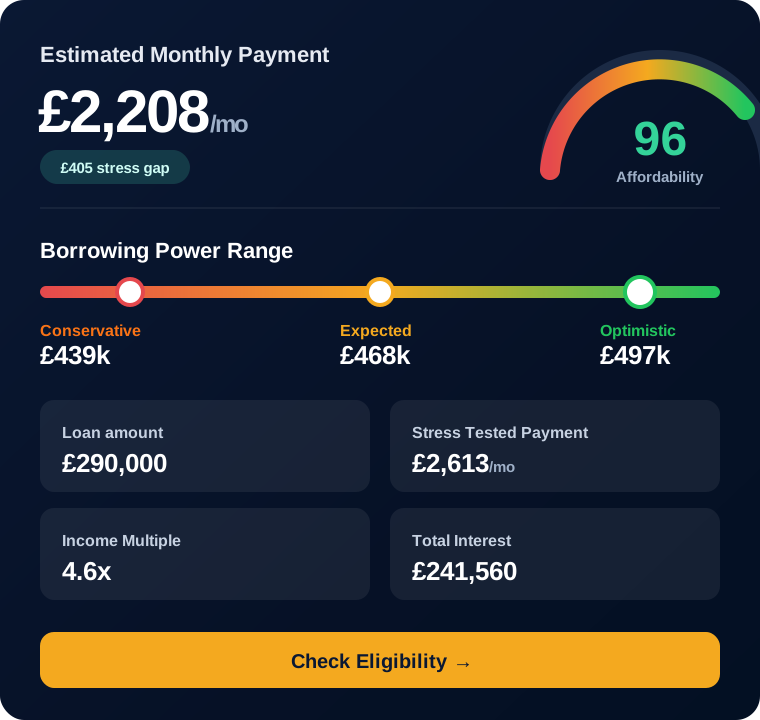
Rather than a single false-precision number, the calculator shows a range — conservative, expected and optimistic — because lenders genuinely differ. Where you land within it depends on your income structure, credit profile and which lender's criteria you meet. Treat the expected figure as your planning anchor and the optimistic figure as something a specialist lender might support with the right case.
What it does not do
The calculator is a planning tool, not a decision in principle. It does not run a credit check, it cannot see your full income evidence, and it does not commit any lender to a figure. Stamp duty and tax figures change between tax years and should be confirmed for the current year. When you are ready to turn an estimate into an offer, a specialist adviser who understands medical income is the right next step — and we can introduce you to FCA-regulated advisers who do exactly that.
This article is general information for medical professionals and is not personal financial advice. Figures relate to the 2026/27 UK tax year and may change. Professional Medical Financial is an introducer that matches you with FCA-regulated advisers; any regulated advice is provided by those firms. The value of investments can fall as well as rise. Your home may be repossessed if you do not keep up mortgage repayments. NHS and other defined-benefit pensions provide valuable guaranteed benefits and transferring out is unlikely to be suitable for most people.
Frequently asked questions
As a rule of thumb, lenders work to an income multiple of roughly 4 to 5 times gross annual income, but the real figure is the lower of that cap and what your monthly income can comfortably afford once commitments and a stressed interest rate are taken into account. The calculator shows both, so you see the binding constraint rather than just the headline multiple. Some specialist lenders offer enhanced multiples for medical professionals.
Both. The lender income-multiple cap is applied to your gross annual income, while the affordability check uses your monthly take-home pay minus existing commitments, assessed at a stressed interest rate over the term. Using both mirrors how a real underwriter assesses a case.
Medical careers do not look like a standard salaried job. Training pay rises through defined points, NHS roles can involve rotations and banding, and many doctors have locum, private or future-consultant income. A generic calculator that only looks at base salary can understate what specialist lenders — who understand these patterns — may actually offer.
You can enter additional annual income such as rental, investment or private-practice earnings. Because lenders discount this type of income for voids, costs, tax and sustainability, the calculator counts it at 60% of the figure you enter — a prudent middle of the 50–75% range lenders typically apply.
Credit commitments such as loans, car finance and card balances reduce the income available to service a mortgage, so higher commitments directly lower your affordability-based borrowing power. The calculator updates live as you change the figure so you can see the impact instantly.
Lenders must check you could still afford the mortgage if interest rates were higher than today. That higher assumed rate is the stress rate. The calculator assesses affordability at the stress rate, which is why your stress-tested monthly payment is higher than the headline payment.
Loan-to-value (LTV) is the loan as a percentage of the property price. A 10% deposit gives 90% LTV; a 25% deposit gives 75% LTV. Lower LTV generally unlocks better rates and wider lender choice. The calculator shows your LTV and how much more deposit would move you into the next band.
No. It performs an indicative calculation in your browser and does not run any credit check or search, so there is no impact on your credit file.
No. The results are indicative estimates to help you plan. Actual lending depends on a full assessment of your income evidence, credit profile, commitments, property and the individual lender's criteria. Speaking to an adviser is the way to confirm what is realistically available.
Often yes. Higher-LTV products (up to 90–95%) exist, and some lenders are more flexible for medical professionals. A smaller deposit can mean a higher rate and a more important affordability check, both of which the calculator helps you understand before you apply.
Sources
- FCA Handbook — MCOB 11: responsible lending and affordability
- Bank of England — Bank Rate and monetary policy
- GOV.UK — Stamp Duty Land Tax (rates and first-time buyer relief)
- MoneyHelper — How much can you borrow for a mortgage?
- BMA — Pay scales for doctors
- UK Finance — mortgage lending data and guidance